BLEEDING GUM CONCERNS
Receding Gums
Receding gums happen slowly, and most people don't notice the change until sensitivity appears or teeth start to look slightly longer. Early assessment prevents progression and often avoids the need for gum grafting. Recession can come from brushing habits, gum disease, bite forces, genetics, or even one small injury. The good news: most causes are treatable when caught early.
We'll walk you through how to tell if it's an emergency and what to do today.
Why this happens
Gums pulling back from teeth, increasing sensitivity and risk of root exposure.
What Your Symptoms Usually Mean
Recession on one side of the mouth
Often linked to brushing habits (more pressure on your dominant hand's brushing arc) or plaque buildup that happened to settle more on one side. This mirrors exactly what the old page highlighted: recession doesn't always occur symmetrically.
Recession on one tooth only
This commonly traces back to a very localized cause—old abrasion, a cut from food, orthodontic relapse, or bite pressure concentrated on that tooth. The old page explained this well, and we keep it here because patients often fear the worst when just one tooth is involved.
Recession with sudden sensitivity
Exposed root surfaces transmit hot, cold, and sweet sensations more easily. Sensitivity does not always mean severe disease; it is often the first early sign that the gum edge is beginning to thin.
Recession with bleeding or puffiness
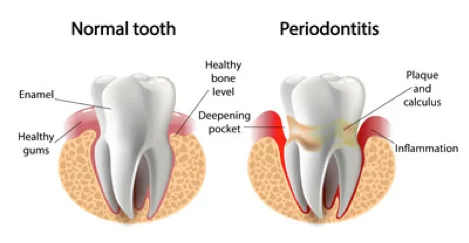
This points toward early gum disease—exactly the connection the old page emphasized. Plaque trapped under the gum becomes tartar and irritates the tissue, making it recede over time.
Teeth feeling slightly loose or shifting
This is a later-stage signal that the gums and bone need immediate attention. The old page strongly highlighted this risk, and it remains an important early-warning indicator.
Common Causes of Gum Recession
Brushing too hard or using a hard-bristle brush
Firm pressure slowly pushes the gum edge away. The old page stressed this heavily, so we keep it verbatim in concept: switch to a soft brush and gentle technique.
Gum disease (the most common cause)
Plaque trapped below the gum line turns into tartar and creates inflammation that softens and pulls the gum away. This was a major educational point in the old page and still core to the new content.
Crooked teeth or bite imbalance
Extra force on specific teeth leads to uneven wear on the gums. This angle came from the old page's note on "abnormal wear patterns."
Genetics
Some people naturally have thinner gum tissue—this was explicitly noted previously and is worth retaining.
Past injury or trauma
A scratch, cut, or irritation from food or habits (nail-biting, accidental abrasion) may heal poorly and leave a gum line that sits lower on just one tooth.
When You Should Worry (and When You Don't Need To)
Mild recession
Occasional sensitivity, slightly 'longer' tooth appearance, no bleeding. Usually manageable with gentle cleaning, habit changes, and early treatment.
Moderate recession
Exposed root surface, sensitivity to cold air and brushing, food catching near the gumline. Needs prompt evaluation to prevent progression.
Advanced recession
Teeth that feel loose, noticeable gaps forming, ongoing bleeding or inflammation. Delaying treatment significantly increases tooth-loss risk.
How We Treat Receding Gums
Gentle deep cleaning (Scaling & Root Planing)
If gum disease is the cause, we remove the plaque and tartar hiding beneath the surface. This was a major part of the old page—still essential, still the first line of defense.
Medication or localized antibiotics
Helpful when inflammation is concentrated in one or two areas. Keeps treatment conservative when possible.
Bite alignment or pressure relief
Small adjustments or orthodontic correction can prevent further recession in areas experiencing excess force. The old page highlighted this but framed it differently—we modernize it here.
Laser therapy (when appropriate)
Some patients benefit from laser stimulation to encourage healthier gum attachment—referencing the old page's discussion of modern techniques.
Gum grafting (for advanced recession)
When the gum edge is too thin or too low to grow back, a graft restores protection. This should feel like a natural, predictable next step—not a last-resort surprise.
Home-care improvements
Soft-bristle brushing, reduced pressure, improved technique, water flossers, and desensitizing toothpaste help maintain results.
How we understand it
We measure gum attachment levels, check for inflammation, map where recession is happening, review brushing technique, and assess bite forces or teeth that may be under extra stress. If gum disease is part of the cause, we'll show you where buildup is hiding and how we can remove it. If the reces...
How to Protect Your Gums Moving Forward
Use a soft or electric toothbrush with light pressure.
Avoid abrasive brushing patterns—especially horizontal scrubbing.
Keep up routine cleanings to prevent plaque from building below the gum line.
Address grinding or clenching if present (night guard, bite evaluation).
Stay hydrated + avoid smoking, which slows gum healing.
Check your gums monthly just by lifting your lip and looking for changes—patients appreciate this tip from the old page.
What relief looks like
You will leave knowing exactly why your gums are receding, how severe it is, and the most predictable way to stabilize and protect the area. For many people, recession can be halted—and comfort restored—with gentle, conservative care.
- •Deep cleaning to address gum issues
When to call sooner: If you have swelling, fever, or trouble sleeping from pain, let us know when you call — we'll prioritize you.
Pro Tip
If one spot feels more sensitive or looks 'longer,' point it out—we can usually identify the exact cause during your exam.
Ready for relief?
Same-day appointments often available.
Same-day appointments often available. We handle emergencies gently.
LEARN MORE
Related blog articles
Periodontics Can Save Your Smile by Restoring Your Gums
Visit our periodontics office if you need to restore a smile following the damaging effects of periodontal disease.
Read articleUnderstanding Dental Insurance: A Complete Guide for Bay Area Families
If you've ever stared at your dental insurance Explanation of Benefits (EOB) and thought, "I have no idea what any of this means," you're not alone. Dental insurance confuses everyone—including highly educated professionals, successful business owners, and people who manage complex budgets for a living.
Read article
Tips From an Oral Surgeon for What to Eat After Dental Implant Surgery
As an oral surgeon, we perform dental implants oral surgery on a regular basis. This procedure allows us to give our patients a permanent replacement solution for a missing tooth and root.
Read articleCommon questions about Receding Gums
Is receding gums serious?
Receding gums happen slowly, and most people don't notice the change until sensitivity appears or teeth start to look slightly longer. Early assessment prevents progression and often avoids the need for gum grafting. Recession can come from brushing habits, gum disease, bite forces, genetics, or even one small injury. The good news: most causes are treatable when caught early.
How do I know if I need treatment?
We measure gum attachment levels, check for inflammation, map where recession is happening, review brushing technique, and assess bite forces or teeth that may be under extra stress. If gum disease is part of the cause, we'll show you where buildup is hiding and how we can remove it. If the recession is structural, we'll guide you through options like bite adjustment or grafting when appropriate.
Can this go away on its own?
You will leave knowing exactly why your gums are receding, how severe it is, and the most predictable way to stabilize and protect the area. For many people, recession can be halted—and comfort restored—with gentle, conservative care.